Sole F80 treadmill review: the one we'd buy for a household that runs and walks
The Sole F80 is our pick for a home where one person runs and another walks: a 22-inch belt, a 3.5 HP motor and a lifetime motor warranty, with nothing to subscribe to. If nobody runs, the F63 saves you about $500.
We may earn a commission from links. It never changes our picks. How we make money
 82 × 37 in open
Sole F80 Treadmill
Our take: A 22-inch belt, a 3.5 HP motor and a 350 lb frame designed to stay steady at speed, for less than most machines with a screen you'd end up ignoring.
Usually $1,599 to $1,899 (list $1,899). Prices change often, so the retailer has today's.
Pros
- 22 x 60 in belt for tall runners
- Lifetime frame and motor warranty
- 350 lb weight rating
- Hydraulic fold you can lower one-handed
- No subscription needed for anything
Cons
- 82 in long open and 278 lb
- Touchscreen is slow as a tablet
- Speed buttons are slow for intervals
- No decline for downhill training
We haven't bench-tested our own Sole F80 yet. This review is built from the published specs, the warranty and how the machine is designed. When our measurements are in, they'll appear on this page and the update history at the bottom will say so.
Is the Sole F80 worth it?
Yes, if someone in your house runs. The Sole F80 is the treadmill we point people to when they describe a normal household: one person running three or four times a week, another walking most mornings, and a spare bedroom the machine has to share with a desk. It puts a 22 x 60 inch belt and a 3.5 HP motor on a deck that folds, backs the frame and motor for life, and never asks for a monthly fee. Typical prices run $1,599 to $1,899, so check the retailer for today’s number.
If nobody runs, save about $500 and buy the Sole F63. If a trainer on the screen is the reason you want a treadmill, the NordicTrack Commercial 1750 does that and the F80 doesn’t.
We haven’t bench-tested our F80 yet, so this review is built from Sole’s published specs and what we know about machines in this class. What we’ll measure is listed at the end.
Running on it
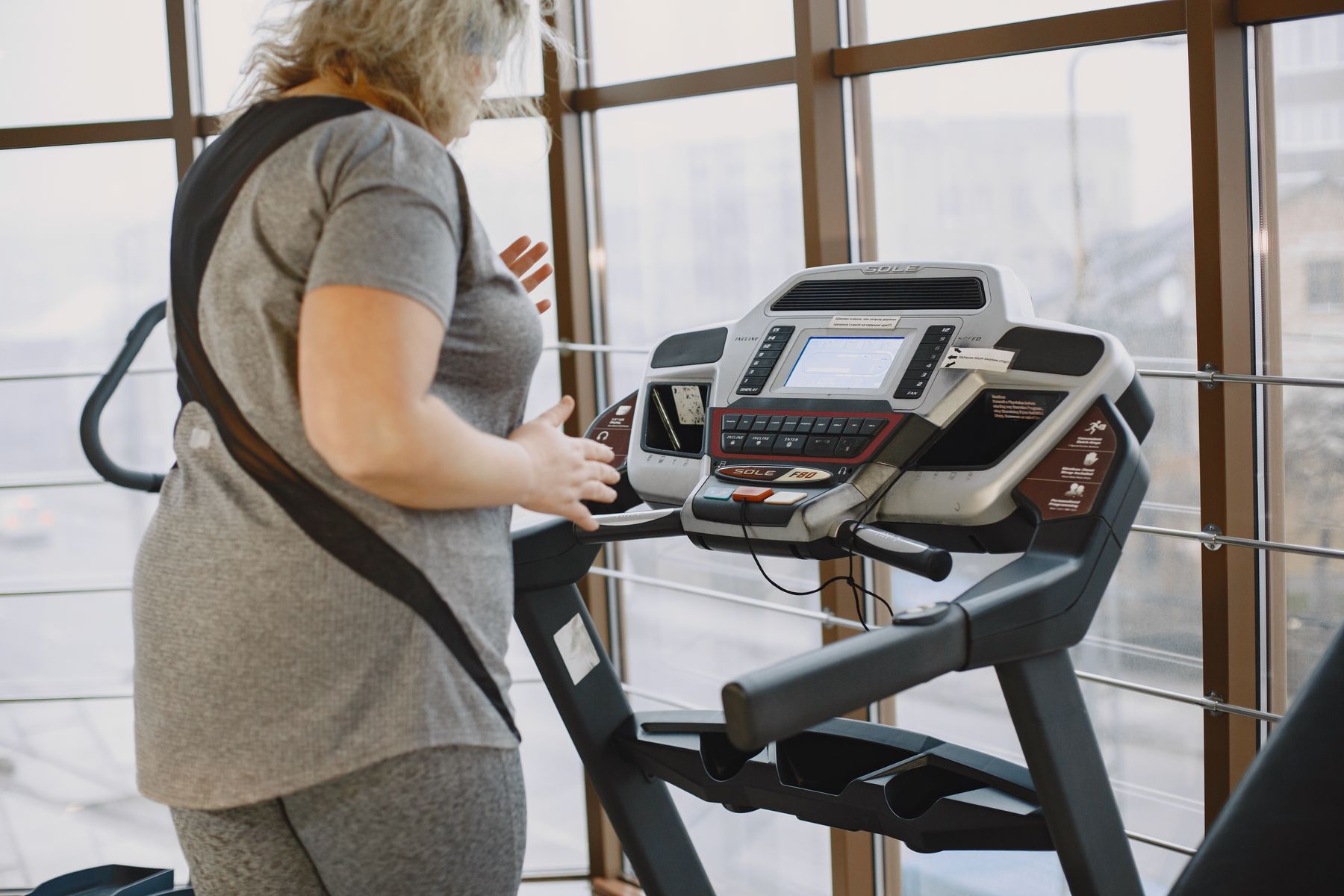
The belt is why you buy this machine. Twenty-two inches of width forgives a tired stride at mile six, and 60 inches of length means a six-footer at 10 mph lands mid-belt instead of near the back edge. The 3.5 HP motor clears the bar we set for daily running above 180 lb, and the F80 is the cheapest Sole that does. The frame is rated to 350 lb. We like a 50 lb margin for runners, so think of it as a machine for runners up to about 300 lb.
Sole’s Cushion Flex deck is on the firm side, closer to a track than the bouncier NordicTrack decks. That suits long runs and plenty of knees. Walkers who want something softer underfoot may prefer a Horizon.
Speed runs from 0.5 to 12 mph and incline from 0 to 15%, changed by buttons on the console and the arms in 0.1 mph and 0.5% steps. That’s fine for steady runs and slow for intervals. If you change pace every minute, the roller dials on the Horizon 7.0 AT are much quicker. The heart-rate grips read high, as they do on most treadmills, so pair a chest strap over Bluetooth if you train by heart rate.
Space, noise and setup
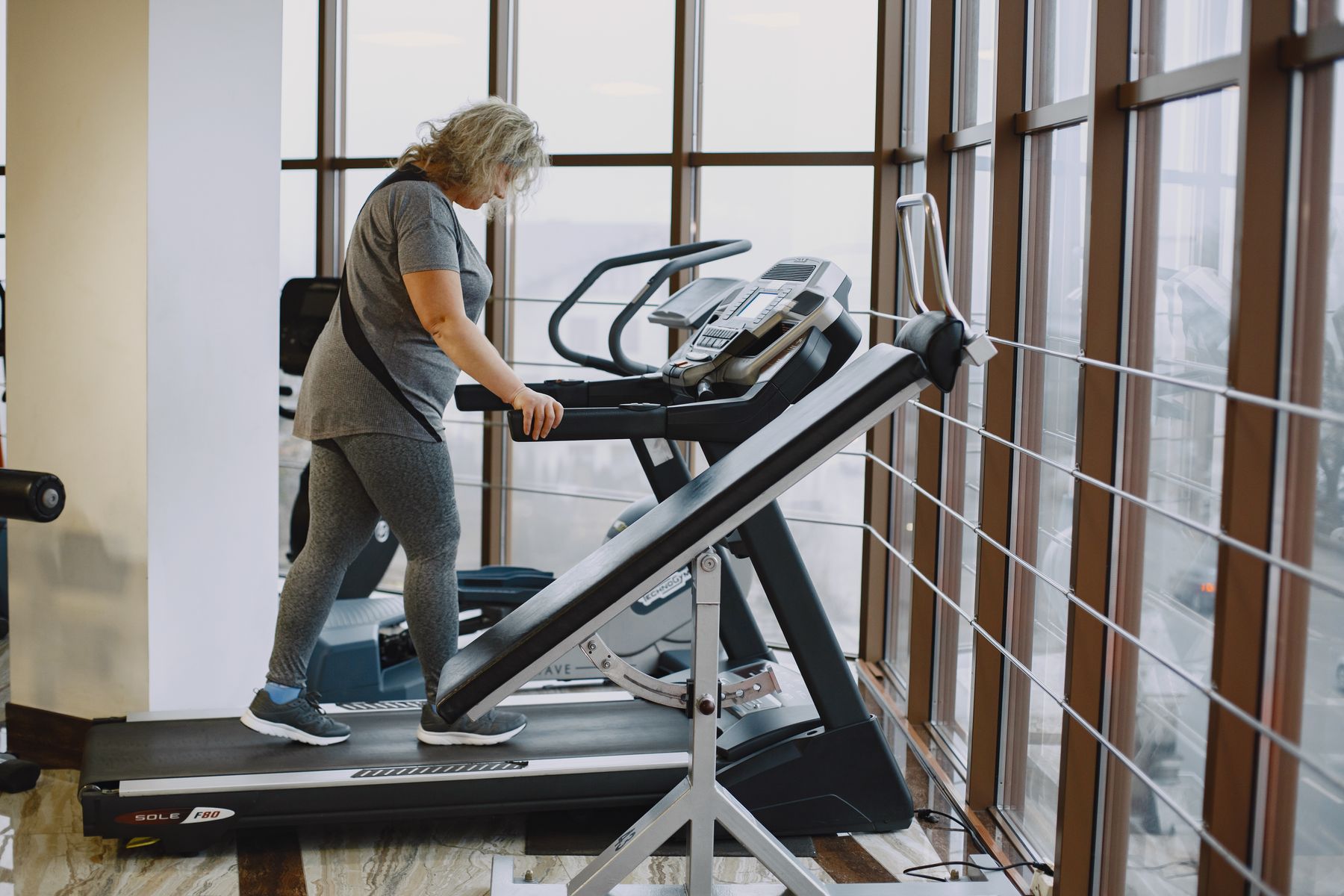
Open, the F80 takes 82 by 37 inches of floor. Safety guidance asks for 78 inches clear behind the deck and 20 on each side, so you’re really planning for about 13 by 6.5 feet. In a 12-by-12 room that’s half the floor. Folded, Sole quotes 44 inches from the wall, and the hydraulic strut lowers the deck slowly enough to do it one-handed. If the length won’t work, our compact treadmill picks start shorter.
The machine weighs about 278 lb. Plan on two people and a hand truck for any stairs, and know that the front transport wheels roll on hard floor and sink into carpet. Sole ships the deck and motor assembled, so the build is bolting on the uprights, lifting the console mast and connecting one harness. Sole recommends a dedicated 15 A circuit.
On noise, a 3.5 HP DC motor in this class is usually a hum at a walk and about conversation level at 6 mph. What the room below hears is your foot strike, and a firm deck doesn’t soften it much. On a second floor, buy a rubber mat with it.
The screen
The 10.1-inch touchscreen, added with the 2023 update, is the part we’d change. As a console it’s fine: speed, incline, time, distance and a dozen built-in programs, all readable from standing height. As a tablet it’s slow by every account we’ve seen, and the Sole+ library is thin next to iFIT or Peloton.
Treat it as a console. Put your own tablet on the shelf above it, or mirror your phone. Nothing on the machine ever asks you to pay, which is a nice change after years of subscription treadmills.
Where it falls short
Length and weight, as above. There’s no getting around 82 inches open. The F63 is 5 inches shorter and the Horizon T101 is a foot shorter.
There’s no decline, either. If you train for trails, the NordicTrack 1750 drops to 3% decline and the Bowflex T9 to 5%, and both fold.
Labor coverage is one year, short next to the lifetime frame and motor promise. Register the machine when it arrives.
F63, F80 or F85
The F-series is one family with different belts and motors, and the right one depends on who’s using it.
The F63 has a 20-inch belt, a 3.0 HP motor, a 325 lb rating and an LCD console. For a walker, or a lighter runner under about 6 ft, it does what the F80 does for about $500 less. Our Sole F63 vs F80 comparison goes line by line.
The Sole F85 adds a 4.0 HP motor, a 375 lb rating, a 15.6-inch screen, five years on the deck and electronics and two years of labor, for about $600 more. That’s worth it for a runner over 250 lb or anyone putting 25 miles a week on the machine. For everyone else, the F80 is the one.
Against the Horizon 7.4 AT
The closest rival outside Sole is the Horizon 7.4 AT. On paper it matches the F80’s 22 x 60 inch belt and 350 lb rating with a 3.5 CHP motor, then adds Horizon’s quick dials, a shorter 76-inch frame and five years of parts coverage. What it doesn’t have is a touchscreen. We haven’t reviewed it yet. Interval runners and anyone short on floor should look hard at it.
What we’ll measure
With our retail unit built in a 12-by-12 spare room, we’ll record noise in dB(A) at 3, 6, 9 and 12 mph from three feet with a 200 lb runner, the real incline at 15% with a digital level, belt speed against a calibrated wheel, watts at the wall, the folded footprint, and how long one person takes to assemble it. Then we’ll fold it every night for a month and see if the latch still clicks. How we test explains the method.
How we rated the Sole F80
- Motor and deck
- 4.8
- 3.5 HP DC, 22 x 60 in belt, 350 lb limit
- Incline and features
- 4.5
- 15% incline, 12 mph top speed
- Warranty
- 4.6
- Lifetime frame and motor cover
- Fits a home
- 3.7
- 82 x 37 in open, folds
- Value
- 4.4
- More machine than the price suggests
Our rating is out of 5 and uses the same formula for every machine in a category: motor and deck, features, warranty, how well it fits a home, and value for the typical price. Until we bench test a machine, the score comes from its published specs. How we rate
What we measure
Bench test scheduledWe haven't measured this one yet. When our unit is set up, it gets the same checks as every machine, and the results go here:
- Noise from 3 ft at 3, 6, 9 and 12 mph
- Incline at the top setting, with a digital level
- Watts at the wall, idle, walking and running
- Assembly time for one person
- Folded size, measured with a tape
Floor plan, from the maker's dimensions
Who should buy the Sole F80
Buy it if
- Homes where one person runs and another walks
- Runners up to about 6 ft 2 in
- Rooms where you'll fold the deck between sessions
Look elsewhere if
- Rooms with less than 7 ft 6 in of clear length
- Anyone who wants streaming classes on the console
- Upstairs rooms where foot strikes carry
Usually $1,599 to $1,899 (list $1,899). Prices change often, so the retailer has today's.
Sole F80 specs
| Specification | Sole F80 |
|---|---|
| Motor | 3.5 HP DC |
| Belt | 22 x 60 in |
| Speed | 0.5–12 mph |
| Incline | 15% |
| User weight limit | 350 lb |
| Footprint (L × W × H) | 82 × 37 × 66 in |
| Folded | 44 × 37 × 72 in |
| Machine weight | 278 lb |
| Console | 10.1 in touchscreen |
| Power | 120 V, dedicated 15 A circuit recommended |
| Warranty | Lifetime frame and motor, 3 yr deck/electronics/parts, 1 yr labor |
| Status | Current model · 2008–present (current generation 2023) |
Manufacturer's published specs. We check dimensions with a tape when our unit arrives.
How it compares with its closest rivals
Swipe sideways to see every model
| Sole F80(this review) | Horizon 7.4 AT | NordicTrack Commercial 1750 | |
|---|---|---|---|
| Our rating | 4.5 / 5 | 4.6 / 5 | 4.2 / 5 |
| Typical price | $1,599–1,899 | $1,499–1,999 | $1,999–2,499 |
| Motor | 3.5 HP DC | 3.5 CHP | 3.5 CHP |
| Belt | 22 x 60 in | 22 x 60 in | 22 x 60 in |
| Top speed | 12 mph | 12 mph | 12 mph |
| Incline | 15% | 15% | -3% to 12% |
| Weight limit | 350 lb | 350 lb | 300 lb |
| Footprint | 82 × 37 in | 76 × 37 in | 80 × 38 in |
| Folds | Yes | Yes | Yes |
| Warranty | Lifetime frame and motor, 3 yr deck/electronics/parts, 1 yr labor | Lifetime frame and motor, 5 yr parts, 2 yr labor | 10 yr frame, 2 yr parts, 1 yr labor |
Manufacturer specs. Measured noise is added once we've tested a machine.
Usually $1,599 to $1,899 (list $1,899). Prices change often, so the retailer has today's.
Is the Sole F80 right for you?
Answer three quick questions and we'll give you a straight answer. No email needed.
Sole F80 questions, answered
Is the Sole F80 good for running?
Yes, on its specs. A 22 x 60 in belt, a 3.5 HP motor and a 350 lb frame are what we look for in a daily running treadmill, and the firm deck suits long runs. Once we test it, we'll check that the belt holds speed at 9 mph under a 200 lb runner. If you're over 250 lb or running more than 25 miles a week, look at the Sole F85.
How loud is the Sole F80?
We haven't measured ours yet. Treadmills with this motor class usually sit in the high 50s dB at a walk and the mid 60s at 6 mph, roughly conversation level, and we'll test at 3, 6, 9 and 12 mph from three feet. The noise neighbors actually notice is your foot strike through the floor, and a rubber mat is the cheapest way to soften it.
Does the Sole F80 need a subscription?
No. Everything works out of the box without an account: speed, incline, the built-in programs and Bluetooth. The touchscreen offers Sole+ and a few streaming apps, but none of them are required, and you can mirror your phone to the screen instead. That's one of the main reasons we'd pick it over an iFIT machine if you don't want a monthly bill.
How much space does the Sole F80 need?
Open, Sole quotes 82 x 37 in. Add the clearance the safety standard asks for, 78 in behind the deck and 20 in on each side, and you're planning for a space about 13 ft long by 6.5 ft wide. Folded, it's 44 x 37 in on the floor and 72 in tall. We'll check both footprints with a tape measure when we test it.
Can one person assemble the Sole F80?
Mostly, yes. Sole ships the deck and motor already built, so the job is bolting on the uprights, lifting the console mast and connecting one wiring harness. The hard part is moving it. The machine weighs about 278 lb, so you'll want a second person and a hand truck to get the box inside and up any stairs.
What is the difference between the Sole F80 and F85?
The F85 has a 4.0 HP motor, a 375 lb rating, a 15.6-inch screen and longer coverage on the deck, electronics and labor, for about $600 more at typical prices. The belt size, incline range and fold are the same. It's worth the money if you're over 250 lb or running 25 miles a week. Otherwise the F80 is enough treadmill.
What is the difference between the Sole F80 and F63?
The F63 has a 20-inch belt instead of 22, a 3.0 HP motor, a 325 lb rating and a simple LCD console, for about $500 less. For walkers and lighter runners under about 6 ft, it's the better buy. For a tall or heavy runner, those two extra inches of belt width on the F80 are worth paying for, especially late in a long run.
Does the Sole F80 fold?
Yes. A hydraulic assist lowers the deck slowly, so you can let go of it without it slamming down. Folded, Sole quotes 44 x 37 x 72 in, and it rolls on two front wheels that work well on hard floors and poorly on carpet. We'll fold our unit every night for a month to see whether the latch holds up.
What is the Sole F80 weight limit?
The rating is 350 lb on the current model. For runners we like to leave a 50 lb margin, because running loads the deck far more than walking does, so we'd treat about 300 lb as the practical limit for a runner. Walkers can use the full rating. If a heavier runner will be on it daily, the F85 is rated to 375 lb.
How long does a Sole F80 last?
Sole backs the frame and motor for life, and the parts that wear, the belt and deck, can be replaced through Sole. The deck, electronics and parts are covered for three years and labor for one. We can't judge long-term durability from a month of testing, but that frame and motor warranty is among the longest you'll find on a folding treadmill.
Does the Sole F80 have decline?
No. The incline runs from 0 to 15%, and there's no setting below flat. If you want downhill training, the Sole TT8 goes to 6% decline but doesn't fold. Among folding machines, the NordicTrack Commercial 1750 drops to 3% decline and the Bowflex T9 to 5%, so either is a better pick for trail runners.
Is the Sole F80 worth it over the Horizon 7.4 AT?
They're very close on paper: the same 22 x 60 in belt, a 3.5 HP-class motor and a 350 lb rating on both. The Horizon has quick dials, a shorter 76-inch frame and five years of parts coverage. The Sole has a touchscreen and a firmer deck. We haven't tested the 7.4 AT yet, but we lean Horizon for interval runners and tight rooms, and Sole if you want the screen.
Ready to buy the Sole F80?
A 22-inch belt, a 3.5 HP motor and a 350 lb frame designed to stay steady at speed, for less than most machines with a screen you'd end up ignoring.
Usually $1,599 to $1,899 (list $1,899). Prices change often, so the retailer has today's.
Update history (2)ShowHide
- November 5, 2026Rewritten for clarity. Added key takeaways, pros and cons, and our rating.
- October 18, 2026First published, written from the manufacturer's specs ahead of our bench test. Test figures are illustrative until our measurements replace them.